
Area Codes Serving Monroe
Monroe is inside the 704 and 980 pair. 704 is the older of the two and dates back to the first round of area codes in 1947, when it covered a broad slice of North Carolina. 980 is much newer. It went into service in 2001 and was placed over the same territory rather than taking a piece of it. Both codes work for a Monroe address, and neither one signals a different part of town.
Local phone numbers reflect that history. Most published city, county, school, court, and utility lines still carry 704 because they were assigned before or during the early overlay years. Newer lines, mobile accounts, internet-based phone service, and large institutional systems often draw from 980. The hospital in Monroe answers on a 980 number while City Hall answers on 704, and both are ordinary local lines.
| Area Code | Coverage | Year Assigned | Overlay Status |
|---|---|---|---|
| 704 | Monroe, Union County, Charlotte, Mecklenburg County, and neighboring south-central North Carolina exchanges | 1947 | Primary historic code |
| 980 | Identical footprint to 704, including both Monroe ZIP codes and the surrounding Union County towns | 2001 | Overlay since 2001 |
Two codes that were pulled out of this region no longer apply to Monroe. Western North Carolina moved to 828 in 1998, and the state's early numbering also shed territory as it split into separate regions over the years. Monroe stayed in the Charlotte-region code both times.
Monroe Area Code Coverage by ZIP
Since 980 lies directly on top of 704, there is no map line to learn. Every Monroe neighborhood shares both codes. What varies is which code a particular line happened to draw when it was issued, and that depends on the carrier, not the address. Older wireline blocks lean heavily toward 704. Wireless and internet-based service leans toward 980.
The state Public Staff publishes a 704 and 980 area code map that places Monroe well inside the shared boundary. It is the clearest visual proof that the two codes are not split by geography.
- 28110 - north and east Monroe, Unionville Road, Old Charlotte Highway, and the residential and school corridors on that side of town, served by 704 and 980
- 28112 - downtown Monroe, the courthouse and civic core, south Monroe, and the U.S. 74 and Sunset Drive corridors, served by 704 and 980
- Charlotte-Monroe Executive Airport area - inside the same shared region as the rest of the city
- Nearby Union County towns - Indian Trail, Waxhaw, Weddington, Marvin, Stallings, Wesley Chapel, Wingate, Marshville, and Unionville sit in the same Charlotte-region dialing environment
One caution about the towns on that last line. Sharing a dialing region is not the same as sharing a rate center. If you need certainty about a specific number, check its prefix against the federal assignment records rather than assuming the town name settles it.
Overlay vs Split in Monroe
These two words describe the only two ways a region gets relief when it runs low on numbers. Monroe went the overlay route. Nobody in the city was asked to change a number when 980 arrived, which is the main practical difference between the two approaches.
- Overlay
- A new code is layered onto the same territory. Existing numbers stay exactly as they are, and every local call now needs all ten digits. This is what happened in Monroe.
- Split
- The old territory is cut in two. One side keeps the old code and the other side is reassigned to a new one, so half the region has to reprint everything.
- Permissive dialing
- The grace window during a changeover when the old and the new dialing patterns both still connect. It ends on a set date, after which only the new pattern works.
Monroe felt the 1998 split from a distance when 828 was carved out for the mountains, but the city was on the keeping side of that line. The 2001 overlay is the event that actually changed daily habits here.
Dialing Rule for Monroe
Ten digits, always, for a local call. Dial the area code and then the seven-digit number. Seven digits alone will not go through, and that has been true since the overlay entered service in 2001. The federal rule behind it is straightforward: once two codes share a footprint, the network cannot tell which one you meant without the first three digits.
Important: A local Monroe call takes all ten digits. Seven-digit dialing stopped working when the 980 overlay went live in 2001.
Long distance still takes a leading 1 ahead of the ten digits on many lines, depending on how the carrier bills the call. Service codes, star codes, toll-free prefixes, and international dialing follow their own patterns, and those are laid out on the Monroe phone codes page.
History of Monroe Area Codes
The 704 code has been attached to this part of North Carolina since the numbering plan started. For decades it stretched across a wide band of the state. Growth eventually forced two changes. The first took territory away, when 828 was split off for the western counties in 1998. The second added capacity in place, when 980 was announced as an overlay in 2000 and switched on in 2001.
NANPA Planning Letter 229 is the paper trail for that overlay. Planning letters are the formal notices the national numbering administrator publishes when a code is added, and they are searchable by number, date, and subject.
The NANPA planning letters archive holds PL-229 and everything that followed it.
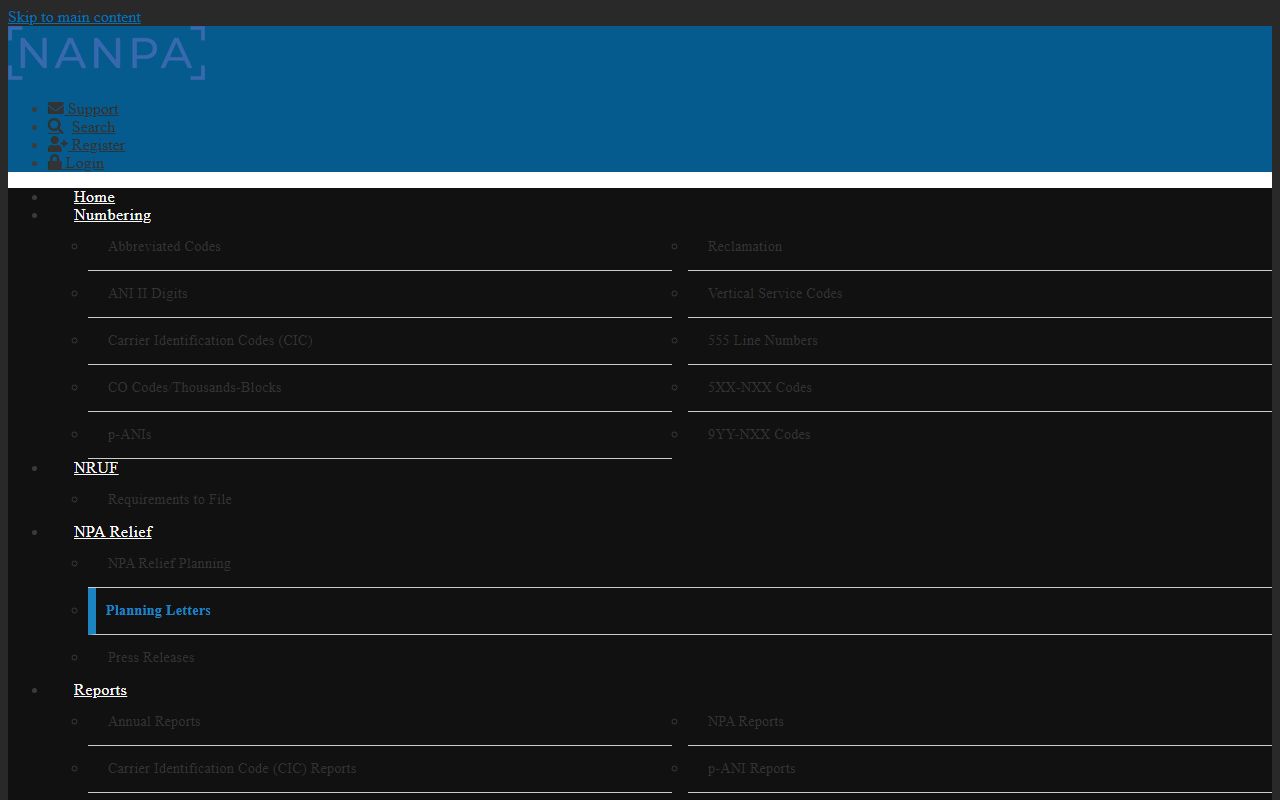
Searching that archive is the way to confirm an area code claim rather than relying on a secondhand summary.
| Year | Event |
|---|---|
| 1947 | 704 issued as one of North Carolina's original area codes |
| 1998 | 828 split off for western North Carolina; Monroe remains in 704 |
| 2000 | Planning Letter 229 announces 980 as an overlay of 704 |
| 2001 | 980 enters service and ten-digit local dialing takes hold in Monroe |
| 2021 | The national 988 rollout pushes ten-digit dialing into other regions; Monroe was already there |
| 2026 | Federal records show active Monroe assignments in both codes, plus a pending 980 block |
Note: dates on this timeline mark when a code was announced or switched on, not when every carrier finished cutting over its own equipment.
Local Exchange Prefixes in Monroe
Underneath the area code sits the prefix, the three digits that come next. Numbering people call it the NXX or the central office code. Prefixes are handed out in blocks to carriers and tied to a rate center, which is the billing area a block belongs to. Monroe has its own rate center, listed under the name MONROE in the national records.
Those records are public. They show each block with its rate center, the company it was assigned to, whether the block is pooled in thousand-number chunks, and whether it is in service yet. Monroe's list runs long. Familiar 704 blocks include 282, 283, 289, 290, 291, 292, and 296, most of them assigned to the legacy wireline carrier here. Wireless and internet-based blocks fill out the rest, including a wide set of 980 blocks such as 210, 269, 313, 347, 397, 425, 476, 699, and 993.
The NANPA central office code assignment records can be downloaded in full and searched by rate center.
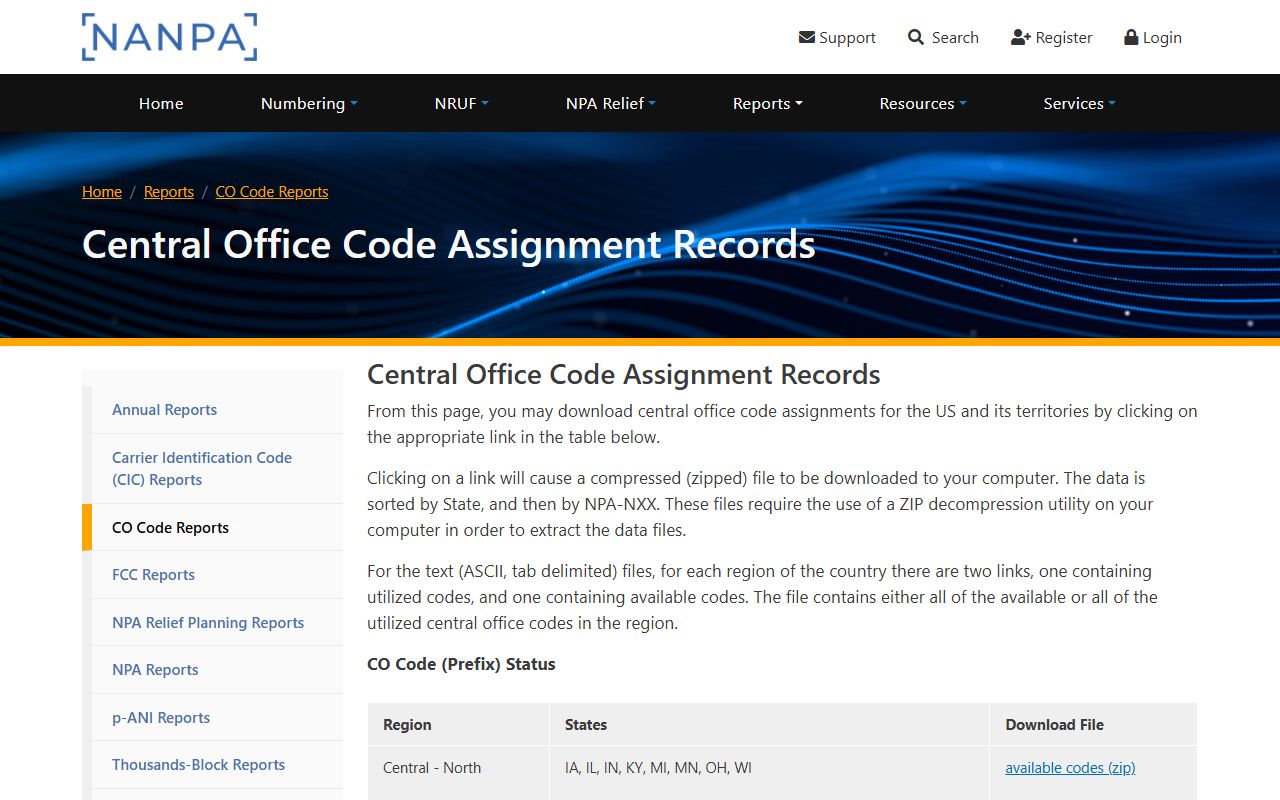
Reading a Monroe prefix out of that file tells you where a block started, not who holds a given number today.
That distinction matters more than it sounds. Number portability lets a customer keep a number while switching carriers, and pooling splits a single block among several providers. So a prefix is a starting clue about origin, never a verdict about the current owner of one line.
Future Area Codes for Monroe
Nothing new is scheduled. The current scan of relief planning turned up no Monroe-specific proposal for a third code, and no announcement that the 704 and 980 pair is close to running out. What did show up is ordinary housekeeping: a new Monroe block, 980-543, listed as assigned with an effective date in July 2026 and marked as not yet in service. That is a routine block assignment, not a new area code.
If a third code ever is proposed, the process is predictable. The national numbering administrator publishes a planning letter, the state regulator weighs in on the relief method, and a permissive dialing window is set before the change becomes mandatory. Residents in an overlay generally do nothing at all, because overlays never require anyone to give up an existing number.
| Field | Type | Required | Notes |
|---|---|---|---|
| Search or browse | Page list search | No | Letters can be paged through or searched by text, date, and code |
| Planning letter ID | Result value | n/a | The 980 overlay of 704 is PL-229 |
| Date | Result value | n/a | PL-229 carries an April 2000 date |
| Subject | Result value | n/a | Names the code being added and the state involved |
Verifying a Monroe Area Code
Two questions come up often. Is this a real code, and does it actually cover the place the caller claims? Both are answerable from public sources in a couple of minutes. Start with the national numbering references, which list every assigned code and every prefix block. Then compare the answer against the office or company the caller says they represent, using that organization's own published number.
The NANPA prefix and thousand-block reference explains how those blocks are structured, which helps when a prefix looks unfamiliar.
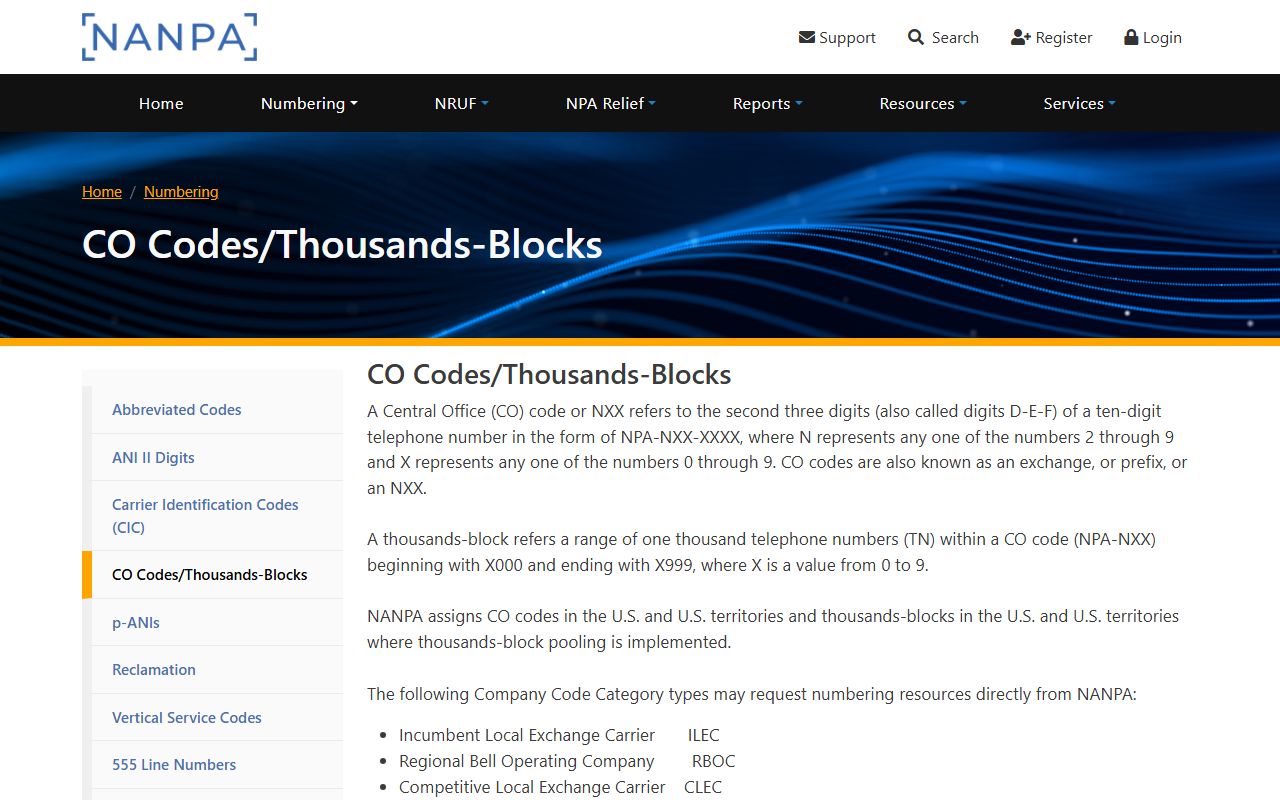
It sits alongside the assignment records, and it is the page to cite when somebody insists a code cannot be local.
If the number claims to be a Monroe office and the digits check out but something still feels wrong, hang up and call the office back on its published line. Caller ID can be forged, and a real Monroe area code on the screen proves nothing about who is actually calling.